 Owoeye Jesuloba Grace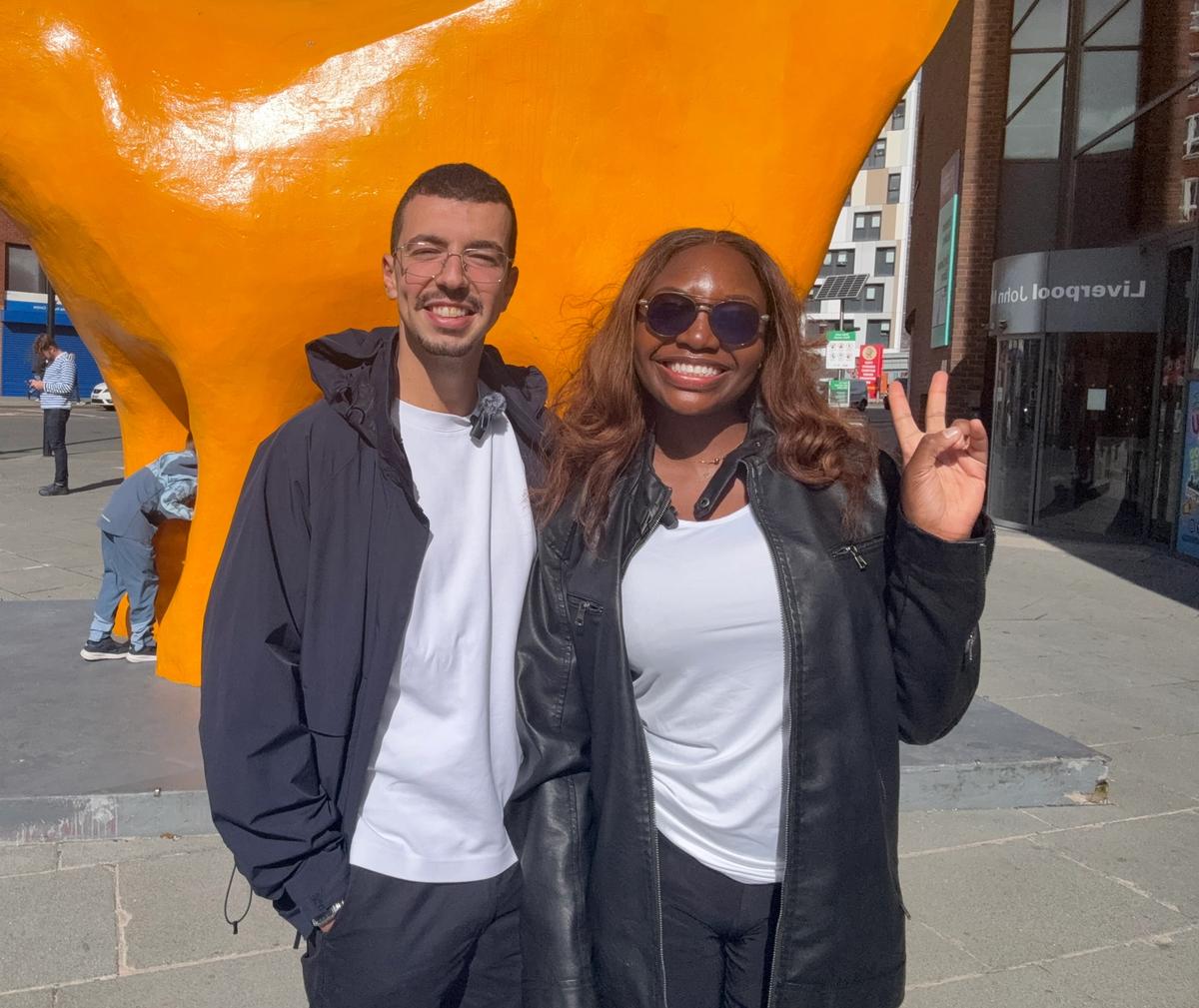
“Tea?”
That was one of Waleed's first little Liverpool confusions.
When he learnt English, there were three meals he knew: breakfast, lunch and dinner.
Simple.
Then he came to Liverpool, and people kept talking about tea.
Tea?
Why were people having tea at that time? And why did everybody seem to be having it?
Eventually, of course, he realised that in Liverpool, “tea” wasn't necessarily the drink at all. It could be dinner. Another tiny piece of the city learnt.
And perhaps that is how a place slowly becomes home.
Not always through one dramatic moment, but through language you didn't understand at first. Food. People. Streets that become familiar. Inside jokes you eventually understand. Places you stop needing directions to.
Walid Bentarcha came to the UK from Algeria, studying a pre-Masters in Lancaster during COVID. Liverpool wasn't necessarily some carefully mapped-out final destination. He visited the city, liked what he encountered and, eventually, stayed.
Nearly five years later, we sat down to talk about what happened in between.
He spoke about how welcoming he found Liverpool and told me that in the years he has lived here, he has personally never experienced racism. We talked about the city's people, its architecture, football, The Beatles, food, its different communities and the things that make Liverpool feel like Liverpool.
At one point, talking about the different cultures and experiences you can encounter here, Walid said something I loved:
“It makes you travel without travelling.”
And I understood exactly what he meant.
There are parts of Liverpool where, within a few streets, you can encounter different accents, food, music, languages and people carrying pieces of somewhere else with them.
Perhaps that is part of what makes the city interesting.
People arrive with their own stories and, over time, begin adding those stories to Liverpool's.
But the part of our conversation that stayed with me most was belonging.
Because Walid didn't arrive saying, Liverpool is going to be my home.
He came. He visited. He experienced the city. He stayed.
And somewhere across those years, something shifted.
Liverpool became familiar enough to miss. Familiar enough that being somewhere else could sometimes feel like being away from home.
That fascinates me.
When does somewhere you moved to become somewhere you belong?
Is it when you know what “tea” means?
When you have your favourite places?
When people know you?
When the streets stop feeling like somewhere you're visiting?
Or does it happen so quietly that you don't realise a city has become home until you leave it and find yourself wanting to come back?
That is one of the questions I keep returning to through Gems of Liverpool.
I want to document the Kennys who have watched one Liverpool neighbourhood change over decades.
But I also want to document the Walids.
The people who came from somewhere else, brought something of themselves with them, found something here worth staying for and, somewhere along the way, became part of Liverpool's story too.
Because the history of a city isn't only about the people who have always been here.
It is also being written by the people arriving now.
Sometimes, belonging begins with something as small as finally understanding what everybody means when they ask you what you're having for tea.
Connected in the archive
Keep following it. Every entry opens onto the next.